
The City was abandoned during the Spanish conquest and remained overgrown and known only to local tribes until tomb raiders discovered the steps in the early 1970's and started selling the gold and pottery they stole on local markets. In 1976 their source was identified and archaeologists moved in followed by intrepid tourists in the early 1980's. Tourism was stopped for three years by an INCIDENT in 2003 where 8 foreign tourists were kidnapped by ELN a rebel group seeking an inquest into human rights. Since 2006 the trek has been deemed safe.
The Ciudad Perdida track can be done in six, five or an ambitious four day and we chose the five day as it seemed to meet our desired pace. The walk begins by lulling you into a false sense of security, only twenty minutes in, after two river crossings (no need to get wet) and an inviting water hole opens up and it is time to stop for the first of many refreshing swims in the river. Immediately after this the first climb begins, a long steep, winding climb through dry, dusty almost chalk white ground. You ascend through the low lying jungle into open farm land with view forward to the mountains and back towards the, much more inviting white sand beaches and clear sea. The views are immediately stunning. I found day one the toughest, stifling heat and high humidity meant we were dripping with sweat from the beginning. One of the party was suffering mild asthma so I even had two day packs to carry.

One of the best things about the hike is the ever changing and incredibly diverse scenery from open grassy farm land to deep jungle and by the end of the first day we had crossed through several changes of scenery. The camps are all basic, some have hammocks only for sleeping some have beds, all with mosquito nets. On our trip the infamous swarms of mosquitos were distinctly absent, fortunately. Most importantly all are set by the river for the all important cool and clean off at the end of the day. You will be dirty, dusty, sweaty and feel very unattractive but that is all good as you are all in the same boat.
 |
| Day one camp, deep in the jungle |
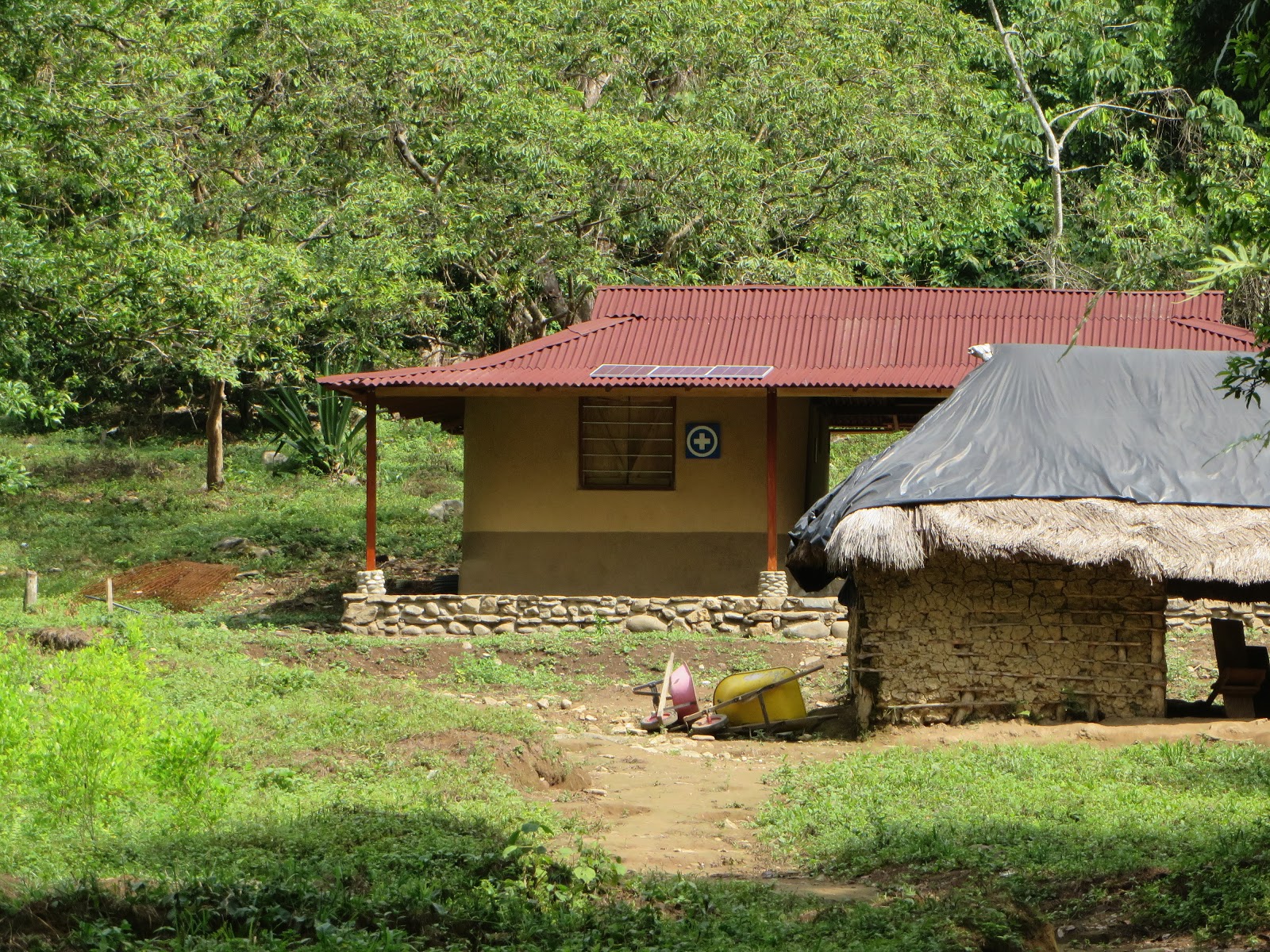
On the second day the steep sided valley is filled with banana trees and feels like you are really deep in the jungle. In the morning you pass through one of the indigenous villages where a small thatched roof school sits alongside a USAid donated medical building which replaced the previous medical centre which is the current school building.
Stopping high in the mountains for one of the scheduled fruit intakes we were all feeling pretty tired having done most of the upward work for the day but one glimpse of a football and a sudden rush of energy came upon at least some of us. A game of five a side was hastily arranged!
 |
| Next goal wins! |
Arriving at camp two we were tired and the small cramped bunk rooms felt damp and busy, a cool off in the river was most welcome not for the first or last time. During the briefing for the next day some of our concerns over the pace of the trip were clarified. We were travelling with people doing the four and five day trip but were following the four day pace to the end of day three, meaning two very short days for four and five. A great feed of fish and rice with salad and an early night beckoned us all.
 |
| The always welcome swimming hole. |
Our usual five thirty get up was greeted with anticipation of roughly one hours steep climb to Ciudad Perdida itself. A good feed and we were on the way. We were travelling with an experienced guide and an interpreter and somehow the mention of an early river crossing hadn't made it through the translation so caught some of us by surprise but the river was barely above our knees so there was no great drama.
 |
| Last river crossing before reaching Ciudad Perdida |
A long climb up the stone steps first discovered by tomb raiders and we were on the first of the terraces and were greeted by the first real mosquito invasion (though at different times of year you can expect these throughout the hike). Sixto, our guide and Daniel the interpreter gave us a detailed history of the building, abandonment and later rediscovery right through to post 2006 when the trail first became safe for tourists.
 |
| Steps leading from the first terrace to the main complex |
As we walked through the various terraces I was hugely impressed with the site. Unlike the more visited Macchu Piccu in Peru the stone work was used for terraces and foundations but the houses were built of wood and are long gone. This gives a very different experience which is spectacular. The views over the steep valleys are breathtaking.

The upper terraces are where a lot of the ceremonial and administrative duties would have been carried out. These are the most reconstructed and cleared parts of the city and give the clearest view of how the city may have looked.

 |
| Ciudad Perdida main terraces |
Moving on we walked through the less cleared parts of the city where terraces are moss covered and overgrown, it felt more adventurous by the minute.
We then commenced the walk down to camp three, again via river crossings and the view back over where we had come from. At camp three we all decided that rather than have a very short day four we would push on and all do the four day pace. Although the first part of the trip had pushed the pace a bit we were under no pressure to push on, Sixto was clear we could do either, we now felt ready to push on.

The last camp, La Cabana Tezhumake was my favourite, comfortable and much drier than the humidity of camp two. It was also beside my favourite swimming hole of the trip.
 |
| Cabana Tezhumake, the last camp |

A good nights sleep and we pushed on for a big final day. Back through the steep jungle valleys, the dusty chalk paths, the open farmland, with of course fruit stops and the five a side second leg!
Ciudad Perdida is one of the highlights of our South America trip so far and I would recommend Expotours as a great company to do it with. If you are an avid hiker this should be on your bucket list and if you are relatively fit and going to Colombia you won't find a better use of a few days. It is one of the great hikes and I will be persuading people to go for years to come.


